What is Map Db?
Map Db refers to a specialized database designed to store, manage, and query geographic information. It handles spatial data types like points, lines, and polygons, enabling efficient retrieval for mapping applications, navigation systems, and location-based services across the United States. Its core function is to make location data readily available and highly performant.How do local guides use Map Db?
Local guides and mapping platforms use Map Db to store comprehensive details about points of interest, local businesses, street networks, and geographical features. This data fuels accurate search results, provides precise directions, and supports discovery functions for users searching for places and services near me within US cities and regions.What are common Map Db solutions available in the US?
In the US, common Map Db solutions include PostgreSQL with PostGIS extension for open-source flexibility, MongoDB for NoSQL spatial data, and commercial options like Oracle Spatial and Microsoft SQL Server Spatial. Cloud providers such as AWS RDS, Google Cloud SQL, and Azure SQL Database also offer managed Map Db services, streamlining deployment and scaling.What are the requirements for setting up a Map Db?
Setting up a Map Db typically requires a database server, sufficient storage for geographic data, and a spatial extension or native spatial capabilities. Users need to understand data modeling for spatial information and often utilize GIS tools for data import and management. Hardware scales with data volume and query complexity.How much does a Map Db cost?
The cost of a Map Db varies significantly. Open-source solutions like PostGIS are free but incur infrastructure and management costs. Commercial databases have licensing fees, often based on usage or features. Cloud-based managed services are priced on consumption (storage, compute, data transfer), making costs highly dependent on scale and traffic.What are the benefits of using Map Db for local search?
Using Map Db for local search significantly enhances accuracy and speed. It allows search engines and mapping apps to quickly identify and present relevant local businesses, services, or landmarks based on a user's geographic location. This precision improves user experience and supports effective local discovery across US communities.Can Map Db handle real-time location data?
Yes, Map Db can effectively handle real-time location data. Modern Map Db systems are engineered to process and update dynamic spatial information rapidly. This capability is crucial for applications that require live tracking, such as fleet management, ride-sharing services, or displaying real-time traffic conditions across US road networks. Map Db, what is Map Db, how to implement Map Db, Map Db solutions for maps, Map Db cost comparison, best Map Db for geographic data, open source Map Db, Map Db for local search, Map Db requirements for developers, Map Db FAQs, Map Db tutorialMap Db stands for Map Database, a crucial component for applications and services that handle geographic data. For US local guides and businesses, understanding what Map Db is and how to effectively leverage it is essential for enhancing location-based services, improving navigation, and delivering accurate local information. This comprehensive guide explores Map Db, explaining its core functions and practical applications. Discover where to find reliable Map Db solutions, whether through open-source projects or commercial providers, and learn the key factors in choosing the right one for your specific needs. We will cover how to use a Map Db to store, query, and manage spatial data, including points of interest, routes, and geographic boundaries, directly impacting local search accuracy and map functionality. Get insights into potential costs, common requirements, and why a robust Map Db is a non-negotiable tool for any local-guide focused on providing superior, data-driven location experiences across the United States. This information will help you make informed decisions to power your mapping projects and local discovery efforts effectively.
- What is Map Db used for in local mapping? - Map Db stores and manages geographic data like points of interest, street networks, and boundaries, powering local search, navigation, and location-based services. It ensures accurate and timely retrieval of information for users exploring US cities and regions.
- How can I find the best Map Db solution? - Evaluate your project's specific needs, including data volume, query performance, and budget. Research popular options like PostGIS for open-source flexibility or cloud-managed services from AWS, Google, or Azure for scalability. Compare features, community support, and cost structures to find the optimal fit.
- What are the typical requirements for a Map Db setup? - A Map Db setup generally requires a database server, sufficient storage for spatial data, and a suitable spatial extension or built-in capabilities. Users often need expertise in data modeling and GIS tools for data loading and maintenance. Infrastructure scales with anticipated usage.
- Does Map Db support real-time location tracking? - Yes, Map Db can support real-time location tracking by efficiently storing and updating dynamic spatial data. When integrated with streaming data sources, it allows applications to display moving objects, track fleet movements, or provide live traffic updates on maps.
- What is the difference between a GIS and a Map Db? - A GIS (Geographic Information System) is a complete system for capturing, storing, analyzing, and displaying spatial data. A Map Db is the foundational database component within a GIS, specifically handling the storage and querying of that geographic information.
- Are there open source Map Db options for US developers? - Absolutely. PostgreSQL with its PostGIS extension is a leading open-source Map Db option widely used by US developers. It provides powerful spatial querying capabilities, supports various geographic data types, and benefits from a large, active community for support and development.
When you search for a restaurant near me or directions to a new store, a powerful backend system is at work, quietly delivering that crucial information. This system is often referred to as a Map Database, or Map Db. For anyone using or building location-aware services in the United States, understanding Map Db is foundational. It is the structured repository for all the geographic information that powers your mapping applications, from precise street addresses and points of interest to complex routing algorithms and spatial analytics. Local guides and businesses leverage Map Db to enhance user experiences, ensuring accuracy and speed when users seek local data, whether they are looking for the nearest coffee shop or planning an elaborate road trip across states. Choosing the right Map Db directly impacts the efficiency and reliability of any location-based service, making it a critical decision for developers and content creators alike who aim to serve the US market effectively.
Core Understanding and Fundamentals of Map Db
What is Map Db?
A Map Db, or Map Database, is a specialized database system specifically designed to store, manage, and query geographic or spatial data. Unlike conventional databases that primarily handle alphanumeric information, a Map Db efficiently processes complex data types such as points representing locations, lines for roads or rivers, and polygons for areas like states or parks. This capability is vital for any application that needs to understand and interact with the physical world, from simple map displays to advanced geographic information systems. For US users, this means faster, more accurate results when using navigation apps, finding local businesses, or exploring community resources.
Understanding Map Db involves recognizing its role as the backbone for location-based intelligence. It allows for advanced spatial queries, such as finding all points within a certain radius, calculating the shortest distance between two locations, or determining if a point falls within a specific geographical boundary. These operations are fundamental for everything from local business directories and ride-sharing services to urban planning and environmental monitoring across American landscapes. Without a robust Map Db, the precision and responsiveness that US consumers expect from their mapping tools would simply not be possible.
The efficiency of a Map Db also significantly influences the user experience. A well-optimized Map Db ensures that map tiles load quickly, search results appear almost instantly, and routes are calculated without noticeable delays. This performance aspect is particularly important in a country as geographically diverse and digitally connected as the United States, where users expect seamless interactions with their mobile mapping applications whether they are in a bustling city or a rural area. Choosing the right Map Db directly impacts how effectively a service can deliver timely and accurate geographic insights to its users.
How Map Db Supports Local Guides
For US local guides, Map Db is an indispensable tool that dramatically enhances their ability to provide rich, accurate, and relevant local information. Local guides, whether individual contributors on platforms or businesses managing local directories, rely on Map Db to store detailed entries for millions of points of interest. This includes precise addresses, business categories, operating hours, customer reviews, and even accessibility features for venues across neighborhoods and regions. A robust Map Db ensures this vast amount of localized data remains organized, easily searchable, and consistently up-to-date, directly benefiting users seeking accurate local details.
Moreover, Map Db enables local guides to perform sophisticated spatial analyses that elevate the quality of their recommendations. Imagine identifying popular hiking trails within a state park or pinpointing all coffee shops offering outdoor seating within a specific zip code; these insights are powered by the spatial querying capabilities of a Map Db. By leveraging this technology, local guides can go beyond basic listings, offering curated experiences and detailed local knowledge that truly helps US citizens discover and navigate their communities more effectively. This deep integration makes local discovery more informative and personal.
The role of Map Db extends to improving the discoverability and visibility of local businesses and services. When a local guide adds a new business or updates existing information, that data is processed and stored within a Map Db. This ensures that the business appears correctly on maps, in local search results, and within navigation systems, directly influencing its reach to potential customers across the United States. Ultimately, a well-managed Map Db empowers local guides to be more effective community resources, fostering economic activity and making local exploration easier for everyone.
Choosing a Map Db: Key Considerations
Selecting the right Map Db for your needs, especially if you are catering to a US audience, involves several critical considerations. First, evaluate the scale of your data. Are you managing a few hundred local points of interest, or do you anticipate millions of geographic features covering the entire continent? Your choice will vary significantly between a lightweight, embedded solution and a distributed, cloud-based system capable of handling massive datasets and high query volumes. Consider future growth to avoid costly migrations down the line.
Next, assess your performance requirements. Do your users need instant routing calculations, or is occasional batch processing sufficient? Factors like concurrent users, query complexity, and data update frequency will dictate the necessary processing power and indexing capabilities of your Map Db. For applications where real-time responsiveness is paramount, such as live traffic updates or rapid nearest-location searches across US metropolitan areas, choosing a high-performance solution is non-negotiable. This directly impacts user satisfaction and the overall utility of your mapping product.
Finally, consider the ecosystem and cost implications. Popular open-source options like PostgreSQL with the PostGIS extension offer powerful spatial capabilities without direct licensing fees, though they require in-house management expertise. Commercial solutions from vendors like Oracle or Microsoft provide robust features and dedicated support but come with significant licensing costs. Cloud-managed database services from AWS, Google Cloud, or Azure offer scalability and ease of use, with pricing models typically based on consumption. Evaluate integration with your existing technology stack and available technical talent to make a practical and cost-effective decision for your US-focused project.
Frequently Asked Questions
What are the primary types of Map Db?
The primary types of Map Db include relational databases extended with spatial capabilities, such as PostgreSQL with PostGIS, and NoSQL databases like MongoDB or Elasticsearch that offer native spatial data types and indexing. Dedicated spatial databases also exist but are less common for general use. The choice depends on data structure, scalability needs, and query patterns, influencing how geographic information is managed for US applications.
How does Map Db integrate with mapping applications?
Map Db integrates with mapping applications by serving as the central repository for all geographic data. Applications query the Map Db for specific spatial information, which is then rendered on a map interface. This typically happens via APIs or connectors that translate application requests into database queries, allowing for dynamic map content, search functionality, and real-time location services across the United States.
What are the typical costs associated with Map Db solutions?
Costs for Map Db solutions vary widely. Open-source options like PostGIS are free in terms of software but incur infrastructure, maintenance, and staffing costs. Commercial databases involve licensing fees, which can be substantial depending on features and scale. Cloud-based managed services offer a pay-as-you-go model, where costs depend on data storage, processing, network transfer, and uptime requirements. Budget planning must consider these factors for US-based deployments.
What is Map Db, Map Db best options, how to use Map Db, Map Db cost, Map Db requirements, Map Db for local guides, Map Db features to expect, Map Db near me, Map Db applications


Night Train Route Network Of Deutschen Bahn 2025 ICE IC EC DB Nachtnetz Die Linie 6520 Linienkarte Fahrplan 6520 R Ck Mo Fr TPIOKZ Hujkhjhkjh Urlaubs Express Das Nachtzug Streckennetz XLWRR Karte Bahnstrecken Radiowelle Nrw 1687190522 Winterfahrplan 2026 Desain Nomor Tahun 2026 Shabby Chic 2026 834904982988255232 All Trains Running In 2026 On One Interactive Map Back Track B O T 2026 Scaled 2026 2026 2026 2026 7806065 2026 Thumb Latest Update The Future Railroad And Summary Confirmed Routes For 2026 QBAM Resource April 2026 By Yeastcartography Newgrounds 4255892 536416 2026 March 2026 B548AD8F47E994DE9D96F08539FB5504 4255892 536416 2026 B548AD8F47E994DE9D96F08539FB5504 Der 2026 Nachrichten Aus Halle An Saale Und Region C Database SQL Mongodb Roadmap 2026 Top Modules 2026 Patch Notes Drive Beyond Horizons Wiki 500PX DBH ROADMAP2026 500PX ROADMAP2026.

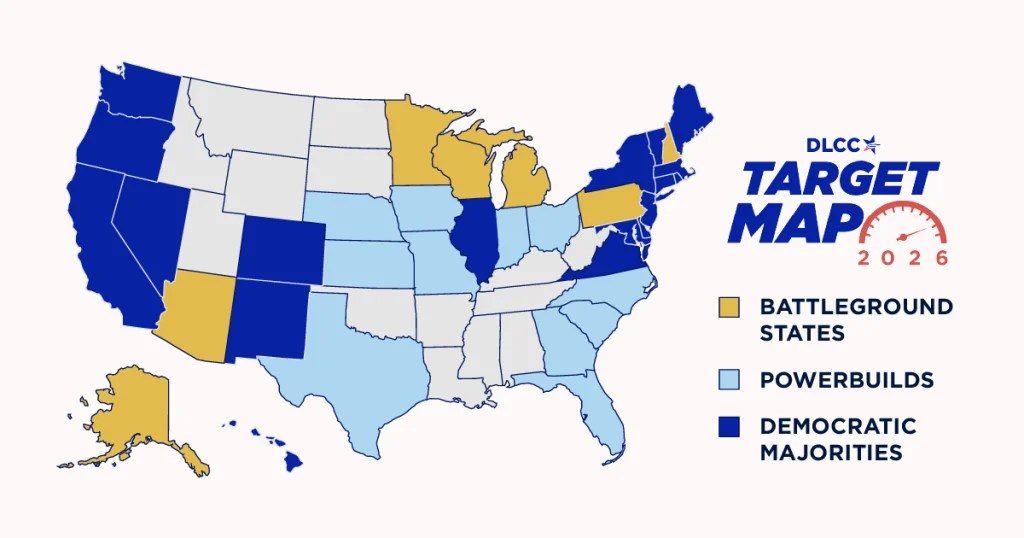

D Beyond Update And 2026 Road Map Nerd Immersion Youtube Maxresdefault 3DAYSOFDESIGN Make This Moment Matter Jun 2026 69834D8DF8983D578047969D 3DAYSOFDESIGN Districts 69834D8DF8983D578047969D 3DAYSOFDESIGN The DLCC Target 2026 Democratic Underground Forums 2026 Expanded Web Inline 2026 Intelligence Brief For 2026 By Train Watch F5036DA3 24a4 42f4 9653 E9CAC656848D F5036DA3 24a4 42f4 9653 E9CAC656848D Dead Daylight Is Getting A New In March Of 2026 Dbd Deadbyday Img ADB Technology Infrastructure Company 2026 With Legend No Regions Blue 2026 DB Designer 2025 Recap 2026 Roadmap AI Driven Database Design Chatgpt Image Jan 2026 AM 2026 ACT Twilight Hour Rogaine Bullen Your Leg Australian 20260225185534 Rogaining Association 2026 1769202 Preview F1685B13 53b5 4a75 8f85 16dda49db812 20260225185534 2026 1769202 F1685B13 53b5 4a75 8f85 16dda49db812 Mapping 2026 2026 Products DBA Admission 2026 AIMLAY World Median Age Country 2026 Earth Twitter Thumbnail.

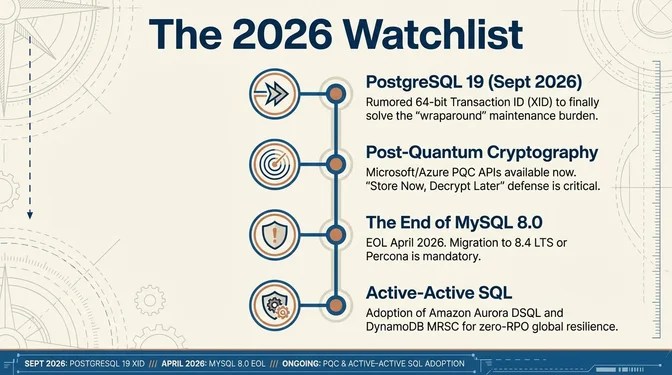

Events 6a0378db6b9f3ec26982e377 Early Registration V1 6a0378db6b9f3ec26982e377 V1 Dead By Daylight 2026 Behaviour Interactive DBD Roadmap State Of Databases 2026 The Dev Newsletter 2026 2026 Dragon Ball Leak Is INSANE Youtube Oardefault Map 2026 PDF Oracle Database Modernization 2026 Associative Pune 2026 Google Maps AI Update 2026 Ask Immersive 3D Navigation 2026 Rallyesprint AC Hof 2026 Rally Com 2026 Fb 2026.